


Commercial -
Matamata site offers consented 430-lot project
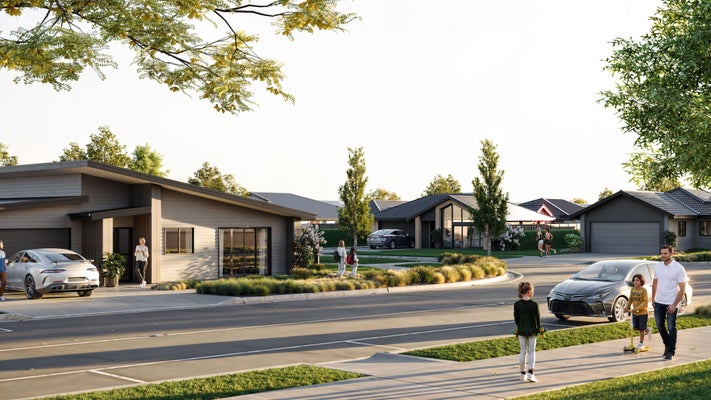
Expressions of interest are being sought for a master-planned residential development project on a more than 44-hectare site with approved consent for 430 residential lots in eight stages.
Master-planned Matamata community with approved consent
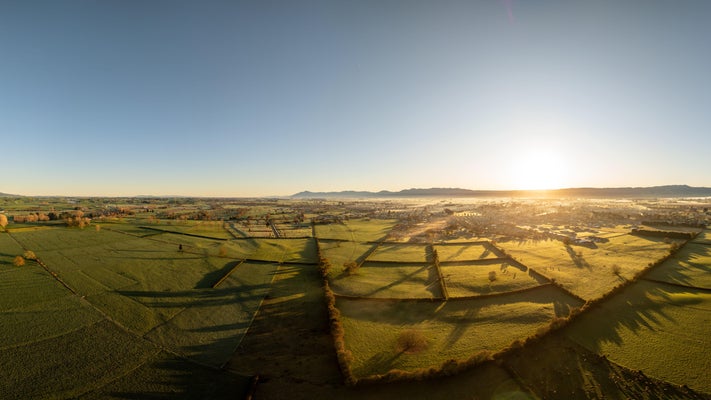
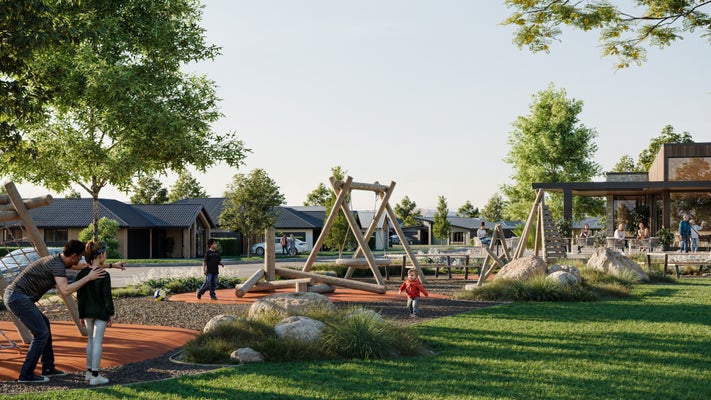
The greenfield expanse for sale on the southwestern edge of the flourishing Waikato town of Matamata comes with approval for an integrated community combining the residential lots with a neighbourhood commercial centre, greenway and open-space network, roads and infrastructure.
The freehold Station Road property, known as Ashbourne, sits beside an existing premium housing development, within easy reach of town amenities.
Residential lots support varied housing types
Diverse residential lots are a key feature of the Ashbourne scheme. More than three-quarters are less than 550 square metres, with the lion’s share spanning 450 to 549 square metres. These are complemented by a smaller number of larger sections.
Together the lots suit a variety of housing types, sizes, and home buyer budgets, maximising the breadth of buyer demand.
Expressions of interest sought for Ashbourne
The Ashbourne landholding is now being offered to buyers through Wesley Gerber, David Cashmore and Travis Cashmore of Bayleys Real Estate. Expressions of interest are invited by Thursday 3 December, and the property will not be sold earlier.
The opportunity is expected to appeal to national and international developers, institutional investors, land bankers, builder groups, and those with offshore capital seeking exposure to New Zealand residential growth.
Eight stages provide a flexible development pipeline
Gerber says the combination of project scale, approved consent, and flexible staging in a provincial growth centre makes Ashbourne a compelling proposition.
“The project offers a long-term development pipeline, with the scale to provide medium- to long-term staged activity.
“The eight approved stages allow flexibility to deliver the project progressively, managing infrastructure investment, capital deployment, and section releases in line with market conditions and buyer demand,” says Gerber.
Zoning and location support town expansion
The Ashbourne site is zoned Rural Residential and Rural Zone, under the Matamata-Piako District Plan.
David Cashmore says a location on Matamata’s southwestern growth edge positions the development as a natural continuation of the town’s footprint.
“The success of the adjoining Peakedale subdivision has established this as a housing growth location, with ongoing section sales and quality housing development offering tangible market evidence of buyer demand and delivery feasibility,” he says.
Population growth underpins housing demand
Long-term demand for housing and residential development is underpinned by a growing population in the Matamata-Piako District, which is projected to house 46,500 residents by 2053, an 18-percent leap from today’s number.
“Matamata’s appeal to existing and new residents – driven by a strong rural economy, established amenities, more affordable living, and connections to major North Island centres – supports continued residential growth,” says David Cashmore.
Town amenities and regional connections nearby
Travis Cashmore says Ashbourne residents will live handy to the town centre, schools, shops, recreation and community facilities, and everyday services.
“An established neighbouring residential environment, proximity to the existing township, and wider regional connectivity make this an ideal location to call home,” he says.
“The local economy draws strength from agriculture, dairying, and an internationally recognised thoroughbred industry, while tourism, manufacturing, construction, retail and professional services contribute to an increasingly diversified economic base.
“Matamata’s position in the ‘Golden Triangle’ connecting with Hamilton, Tauranga and Auckland gives access to major employment centres, services, logistics networks and regional markets,” Travis Cashmore says.
Contact us


