


Total Property -
Between the headlines

Bayleys business leaders reflect on the transactions, changing priorities and market forces that shaped New Zealand’s commercial landscape in 2026.
New Zealand’s commercial property market progressed at different speeds in 2026. Export strength supported regional economies, returning visitors renewed activity in tourism centres, and businesses revisited investment decisions after several demanding years.
All the while, persistent cost increases, global disruption and election-year policy debate continued to influence the pace of commitment.
After a record 2025 for commercial transaction volumes, Bayleys is tracking 10-percent ahead of the corresponding period, year to date. Offshore enquiry, particularly from Australia and Singapore, has contributed, with the exchange rate influencing buyers’ assessment of New Zealand assets.
Across Bayleys’ specialist teams, the year revealed where confidence was translating into action, says Bayleys national director commercial and capital markets, Ryan Johnson.
“Succession brought businesses to market, investors examined the durability of income, occupiers sought premises that worked hard for their businesses, and developers concentrated on sites with a credible route to delivery. Together, these shifts sharpened demand for advice connecting property decisions with wider commercial objectives.
“Infrastructure has provided a tangible basis for some of those decisions. Investors who acquired property around major projects before completion are now seeing greater commercial interest as improved access and amenity change how precincts function.”
While election debate has entrenched uncertainty, Johnson says this should be weighed against the factors that establish enduring value.
“Committed infrastructure, occupier behaviour and local performance give purchasers something concrete to assess. Those fundamentals will continue to shape the commercial landscape beyond the election cycle and into 2027.”
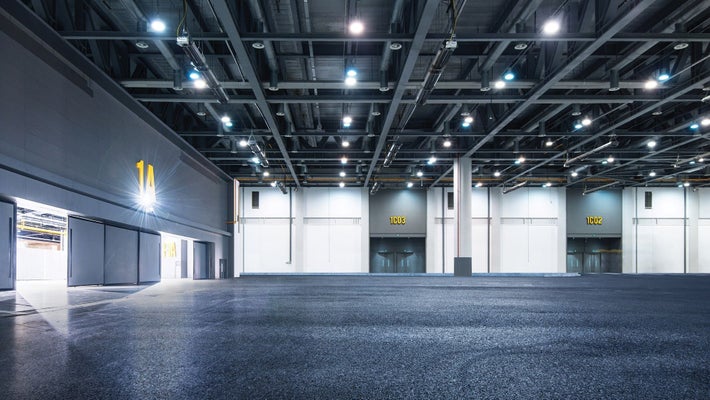
Industrial property buyers prioritise quality and location
Bayleys national director industrial, Scott Campbell entered 2026 expecting improving confidence to support greater leasing and transaction activity.
The year delivered momentum, but unevenly, with purchasers continuing to favour strong locations, quality buildings and secure lease profiles.
“Demand centred around assets where buyers could establish a sound investment case. Elsewhere, geopolitical uncertainty and lending costs continued to slow decision-making processes.”
Yields remained broadly stable despite that caution. Rents and construction costs also held relatively steady, giving developers a more consistent basis for assessing projects. Attention has increasingly focused on well-located sites with longer-term growth potential.
The leasing experience was different, he says. Rising availability and new supply have given occupiers more choice, prompting landlords to compete through the lease package.
“Incentives, fit-out arrangements, lease length and building functionality influenced the overall proposition more than ever. Premises that supported efficient operations could offer value beyond a concession on rent.”
For some occupiers, greater leasing choice did not necessarily reduce their exposure to increases at their next market review, which could still reflect rental growth accumulated in earlier years.
“A subdued market did not necessarily mean a modest adjustment for every tenant,” Campbell notes. “The history and provisions of the lease still determine the outcome.”
Campbell says the anticipated direction of borrowing costs has become less straightforward as inflation and pockets of stronger economic data complicated expectations, while employment remains soft.
“Well-located assets with secure income gave investors a basis to buy this year, while stabilising costs have helped purchasers as they assess their next projects. Both continue to provide ways to prepare for stronger demand without relying on it to make the numbers work,” he says.

Property reform shapes investment decisions
The election was already influencing client conversations early in 2026. For Bayleys national director customer engagement and advisory, Paula Bennett, much of the year’s work involved translating political developments into questions clients could address.
Clients following earthquake-prone building settings, resource management reform and Fast-track processes closely found the relevance was immediate: changes could affect the future use of a property, the cost of retaining it or the pathway to development.
“Clients needed to understand how reforms affected their properties, what steps they would need to take and the likely timeframes. Explaining those distinctions helped them assess their options and set realistic expectations.”
The political uncertainty was accompanied by encouraging international interest. During 2026, Bennett saw overseas buyers increasingly consider New Zealand a viable investment destination, particularly for assets valued above $20 million.
“While domestic conversations often concentrated on the difficulties, international buyers were also seeing reasons to invest here. That level of interest and the value of potential capital is enormously positive for New Zealand.”
That contrast gave Bennett a broader perspective on a year frequently described through constraints. Clients continued to assess opportunities, seek explanations and work through decisions despite challenges.
“Clients responded to uncertainty by asking more detailed questions about their obligations, timing and options. They have continued to prepare, even when committing was difficult. That resilience gives me confidence as we head into 2027,” she says.
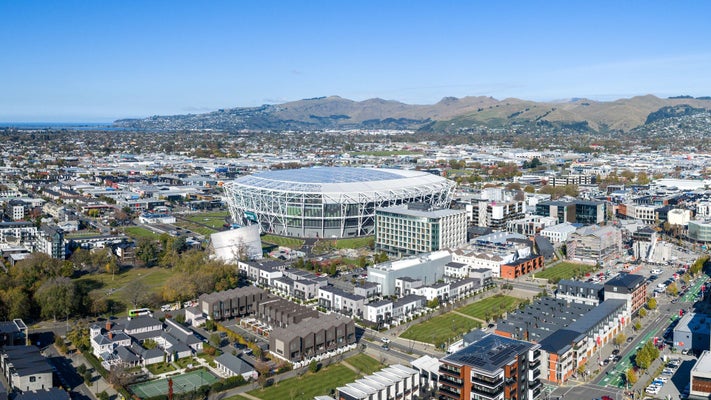
Photo credit: ChristchurchNZ
Hotel investment strengthens as tourism recovers
For Bayleys national director hotels, tourism and leisure (HTL), Wayne Keene, 2026 brought stronger evidence behind the sector’s recovery. Visitor growth and renewed investment activity gave substance to the confidence expressed at the beginning of the year.
Bayleys’ HTL team recorded a strong first quarter, with settled deal numbers and total transaction value substantially above those recorded in the corresponding 2025 period. A sizeable pipeline of conditional transactions reinforced the depth of enquiry.
International arrivals in June rose five percent year-on-year, reaching 94 percent of June 2019 levels. South Island airports welcomed 1.05 million overseas arrivals in the year to June 2026, up from 881,300 a year prior. “The improvement was becoming visible in both visitor activity and investment conversations,” he says. “Buyers had more operating evidence to consider and more confidence in the sources of future demand.”
New venues added to that assessment. Christchurch’s One New Zealand Stadium strengthened the city’s visitor proposition, while the event pipeline at Auckland’s New Zealand International Convention Centre (NZICC) gave investors a clearer view of demand beyond traditional holiday travel.
The year also demonstrated the variety of investment approaches within the sector. An international hotel group purchased 17 apartments and two commercial units within Auckland’s Barclay Suites complex for $7.85 million, with plans to reposition the property. Experienced New Zealand residents purchased Taupō’s Beechtree Motel as a freehold going concern for $9 million and Blenheim’s Marlborough Riverside Hotel sold as a freehold investment for $7.21 million at a 6.66 percent yield.
“Those sales involved different objectives: improving an asset, operating a business and acquiring leased income. The sector supported each of those approaches.”
Keene says firm demand in the $5-$15 million bracket was another feature of the year, as purchasers found opportunities matching their capital and operating experience.
Infrastructure reshapes Auckland’s office market
The shortage of A-grade office space anticipated in early 2026 became a defining part of the year for Bayleys national head of occupier strategy and solutions Steve Rendall.
It was particularly evident in Auckland’s CBD. Further absorption in Wynyard Quarter directed enquiry towards B-grade premises in the CBD, midtown, and core city-fringe locations such as Newmarket and Ponsonby, while suitable single-occupier options above 1,000sqm became increasingly harder to find.
“The shortage reinforces the point that timing for market engagement and early planning are strategic issues. Larger occupiers had to weigh the benefits of relocating against the availability of suitable space, giving landlords who could offer quality premises and certainty of delivery a stronger negotiating position, particularly when limited time was available to the occupier.”
To address the shortage in A-grade space in Auckland, Rendall says major projects are progressing to expand office options over the coming years. Mansons’ 35 Graham Street development is advancing towards delivery in 2028, Cooper & Co has also commenced work associated with its flagship 16,000sqm Britomart Central new-build office and retail building, and Precinct is working to confirm delivery of its 70,000sqm Downtown Carpark project in late-2031.
“All have strong existing interest from major corporate occupants. All will make exceptional contributions to the city landscape,” Rendall says.
Existing buildings also gained new relevance as the City Rail Link enhanced access to the CBD. Rendall notes stronger demand in midtown, including for B-grade space offering lower price points alongside improved public transport connections.
Quattro’s Bledisloe House refurbishment and Auckland Transport’s relocation to 99 Albert Street reinforce midtown’s appeal, while other owners upgraded amenities – e.g., end-of-trip facilities, lobby improvements and offered turnkey suites to attract tenants.
“The CRL has made refurbished B-grade offices more attractive to occupiers balancing cost, quality and staff access, strengthening the case for targeted upgrades. It’s been a long wait, but the finished transport infrastructure is world-class” he notes.
The experience in other major metros was markedly different. Christchurch recorded buoyant relocation activity while attracting varied capital, including an uptick in investment from the Asia-Pacific region.
Wellington remained resilient, but downsizing and surplus sublease space have placed pressure on rents. Rendall says the contrast between Auckland, Christchurch and Wellington reflects differing points in the economic cycle for each city, while noting that the long-term outlook for office occupiers and investors across all three cities appears very positive.
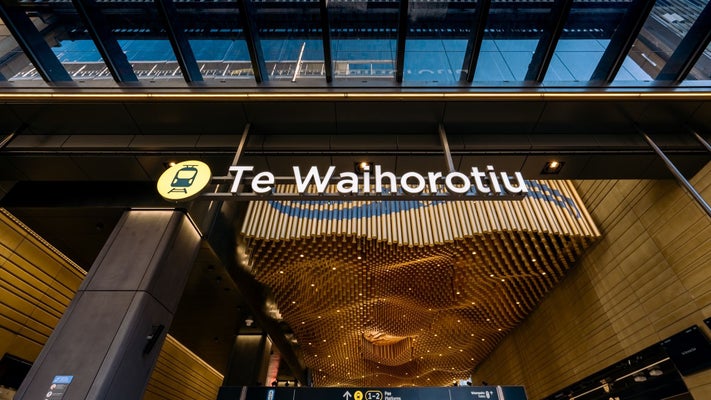
Photo credit: David Harrison and Auckland Transport
Property decisions support wider business goals
For Bayleys national director strategic business development, Davina Henderson the most revealing developments of 2026 were often found in how client relationships evolved.
“An instruction to lease, acquire or sell frequently led to a wider discussion about the client’s business. Understanding that context brought other requirements into view and, in many cases, expanded the engagement across several specialist teams.”
Economic uncertainty, changing workplace expectations and evolving customer demands complicated the decisions. Henderson says the most effective leaders responded by concentrating on what they could influence: their planning, their operations and their readiness to adapt.
That approach was reflected in changing client priorities. Property choices were increasingly evaluated for their ability to improve operational performance, deliver financial outcomes, support staff and manage risk. Certainty and flexibility carried greater weight.
“The conversation became more specific about what the property decision needed to achieve. That gave our team a clearer basis for bringing the relevant expertise together.”
Collaboration across leasing, capital markets, valuation, building consultancy and property management supported that work. Regular portfolio discussions also helped identify requirements before they became immediate problems.
Henderson says that repeat instructions and relationships extending across multiple services were significant outcomes of the year. They reflected clients’ appetite for advice that connected individual property choices with their wider objectives.
Infrastructure capacity drives development land value
For Bayleys director development land sales, Wesley Gerber 2026 reinforced a distinction that has been building for years: land supply and deliverable housing supply are very different questions.
Land prices remained stable, but transaction activity concentrated in plan-enabled areas where infrastructure supported development. Servicing became a decisive consideration, sometimes prompting developers to look beyond their traditional operating locations.
“The constraint was infrastructure capacity rather than land availability. Buyers concentrated on locations where services could support a credible development programme.”
Activity in Auckland’s western Whenuapai and southern Drury illustrates that relationship. Buyers positioning for the next upswing focused on locations where they could reduce delivery risk, although the rate at which finalised homes would sell remains a significant unknown.
Gerber says deals under contract used staged or conditional structures to mitigate that uncertainty, while investor-migration interest continues to contribute to higher-end development activity.
Policy has heavily influenced the year’s decision-making, he says. “Planning reform, infrastructure priorities and Fast-track legislation influenced assessments, while the new consenting pathways brought sites outside established growth corridors into consideration.
Gerber says the mix of housing favoured by developers has also changed. Standalone and duplex formats gained attention over larger terraced and apartment schemes as developers responded to purchaser demand and sought to distinguish their products.
“Buyers are looking closely at what they can build and how quickly it will sell. Development capacity translates into value when infrastructure supports delivery, and the housing mix meets demand.”
Business succession drives sales activity
Business owners’ decisions in 2026 increasingly reflected their own stage of life as well as trading conditions. Bayleys national director business sales William Cheong says succession and the desire to release capital became more prominent after several demanding years.
“Some owners had spent many years absorbing uncertainty. They began asking whether this was the point to realise value and plan the next stage of their lives.”
Ageing ownership contributed to that shift, while buyers continued to seek businesses with proven earnings. Quality offerings have remained scarce and, when brought to market, could attract strong enquiry and competing parties.
The opportunity, he says, extends well beyond metropolitan centres. “Established regional businesses with strong local relationships and national or export-facing potential drew interest, supporting Bayleys’ expansion of our team and geographic coverage.”
“Offshore enquiry also increased through investor-migration channels, particularly from the United States, India and Southeast Asia. New Zealand’s relative stability and transparent business environment continue to appeal to buyers weighing options internationally.”
Recent transactions demonstrate the specific attributes supporting commitment. A fire protection and building compliance provider sold off-market for between $5 and $10 million, following a vendor introduction through Bayleys’ connections.
In Te Anau, a pizzeria sold as a freehold going concern for $2 million. Strong revenue and profit, a main-street location and an 18-year ownership history attracted meaningful interest despite its eight-month operating season.
“Buyers were willing to commit where they could see how earnings would hold up under new ownership. That placed greater weight on reliable financial records, established customer relationships and operations that could transfer without depending on the vendor.”
Cheong says that further network-sourced manufacturing and tourism opportunities reinforced another feature of the year: established property relationships increasingly brought business ownership decisions into the conversation.
Investment fundamentals define the opportunities
Across the divisions, 2026 showed that buyers were prepared to commit when the investment case extended beyond expectations of recovery. Better access increased the appeal of existing premises, infrastructure supported viable development, and transferable earnings underpinned business acquisitions. New Zealand’s slower recovery sharpened the distinction between opportunities that needed improving conditions to succeed and those that offered a sound basis for investment already.
Contact us


